Dentist in Simcoe Ontario Explains the Dental Implant Process Step by Step
Losing a tooth changes more than a smile. It changes how people chew, how clearly they speak, and often how comfortable they feel in social settings. In practice, I have seen patients put off replacement for months or even years because they expected the dental implant process to be painful, complicated, or out of reach. Once they understand how the process actually unfolds, most of that anxiety eases.
Dental implants are one of the most predictable ways to replace a missing tooth. They are not the right answer for every person and every mouth, but when the case is well planned, they can restore function in a way that feels remarkably natural. For patients looking into dental implants Ontario providers offer, the biggest benefit is usually not cosmetic, though appearance certainly matters. It is stability. An implant does not shift the way a removable denture can. It does not rely on neighboring teeth the way a traditional bridge does. It stands on its own, anchored in bone.
If you have been searching for a dentist in Simcoe Ontario and trying to make sense of implant treatment, it helps to know the sequence before you begin. The process is not one single appointment. It is a series of carefully timed steps, with decisions at each point based on healing, bone quality, gum health, and your overall goals.
First, the consultation is about fit, not sales
The first visit for a dental implant discussion should feel thorough. A good consultation is less about telling you what can be done and more about figuring out what should be done. That distinction matters.
At this stage, the dentist reviews your medical history, current medications, past dental treatment, and the reason the tooth is missing or needs to be removed. A tooth lost from trauma presents differently from a tooth lost to long-term infection. A front tooth in the smile zone is planned differently from a molar that takes heavy chewing forces. Patients who grind, clench, or crack teeth at night often need special planning as well, sometimes including mouthguards after treatment to protect the final restoration.
A clinical exam follows. The dentist looks at the gums, bite, jaw space, and the condition of neighboring teeth. X-rays are standard, and in many implant cases a 3D scan is recommended because it shows the width and height of available bone, plus the position of important structures like the sinus or nerve canal. That scan often answers the question patients are quietly worried about: “Do I even have enough bone for this?”
Sometimes the answer is yes, straightforwardly. Sometimes the answer is yes, but with grafting. Sometimes the best treatment is not an implant at all. A patient with uncontrolled gum disease, active infection, or severe bite instability may need those issues addressed first. That is not a delay for the sake of delay. It is how you protect the long-term outcome.
If the tooth is still present, extraction comes first
Many implant cases begin with a failing tooth. It may be fractured below the gum line, loose from advanced periodontal disease, or too compromised to restore. In that situation, the process starts with extraction.
This is often where online searches like tooth extraction near me begin. People are usually in pain, worried about time off work, or hoping the tooth can somehow be saved. Sometimes it can. Sometimes the most predictable path is to remove it and move toward replacement.
Whether the implant can be placed on the same day as the extraction depends on several factors. If the infection is limited, the bone walls are intact, and the site is favorable, immediate implant placement may be possible. If there is extensive infection, bone loss, or soft tissue damage, it is often better to extract the tooth, clean the site thoroughly, and allow a period of healing before placing the implant.
Patients are often surprised that the “faster” option is not always the better one. Immediate placement can be excellent in the right case, but forcing timing to satisfy a calendar can compromise the final result. In the front of the mouth, especially, careful healing and tissue management can make the difference between a crown that looks natural and one that looks slightly off forever.
Bone grafting is common, and it is not a sign something went wrong
One of the most misunderstood parts of implant treatment is grafting. People hear the term and assume their case is unusually difficult. In reality, grafting is routine. Bone shrinks after a tooth is lost. It can also be damaged by infection, trauma, or years of pressure from a denture.
A graft may be done at the time of extraction, at the time of implant placement, or before the implant as a separate procedure. The purpose is simple: create enough healthy bone to support the implant in the correct position.
Position is everything. An implant placed where bone happens to be available, rather than where the tooth should ideally sit, can create functional or cosmetic problems. It is much better to rebuild the site than to accept a poor angle and hope the crown will disguise it later.
Healing time after grafting varies. Small socket grafts may heal in a few months. Larger grafts can take longer. This is one of those moments when patience pays off. Patients who understand that biology has its own timeline tend to be happier with the process than those who expect every stage to run on a fixed schedule.
The implant placement itself is usually easier than patients expect
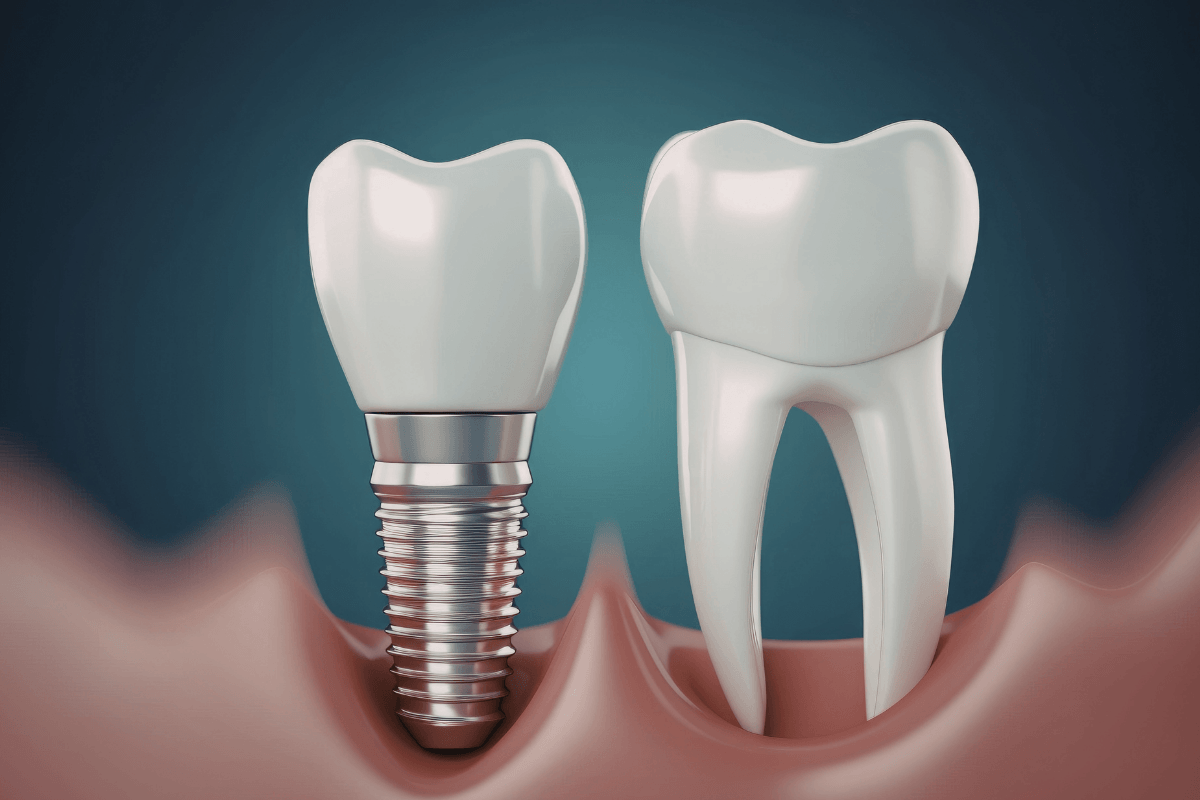
Once the site is ready, the implant can be placed. This is the small titanium post that acts as the root replacement. The procedure is typically done with local anesthetic, much like other dental treatment. Some patients also choose sedation, depending on anxiety level, medical history, and the complexity of the surgery.
The appointment itself is often shorter and gentler than people imagine. There can be pressure and vibration, but with proper anesthesia there should not be sharp pain during the procedure. Most people report that recovery is easier than a difficult tooth extraction. That surprises them, especially if they spent weeks bracing for the worst.
Here is the process in broad terms:
- The area is numbed and the gum is accessed to expose the bone.
- A precise channel is prepared in the bone using a sequence of instruments designed for the implant size and density of the site.
- The implant is inserted and checked for stability.
- Depending on the case, the implant may receive a healing cap right away or be covered under the gum to heal undisturbed.
- The site is closed and post operative instructions are reviewed before you go home.
Those steps sound mechanical on paper, but good implant surgery is highly judgment based. Bone density in the back lower jaw behaves differently from softer bone in the upper posterior area. A narrow front tooth replacement demands a different margin for error than a wider molar site. The surgeon is constantly reading the anatomy, the resistance of the bone, and the soft tissue response as the procedure unfolds.
Healing happens under the surface
After placement, the key event is osseointegration. That means the bone heals around the implant surface and locks it in place. This is the biological foundation of implant success. It is not immediate, and it cannot be rushed.
Many patients feel fine within a day or two and assume the implant must already be “set.” Clinically, however, the implant still needs time. Depending on the site, bone quality, and whether grafting was involved, healing may take a few months. During that period, the dentist watches for stability, healthy gum response, and absence of infection or overload.
This is where expectations matter. An implant is not like placing a filling and being done the same day. It is more like building from the foundation upward. If the foundation heals well, the later stages become much more predictable.
You may be given a temporary tooth during healing, especially in visible areas. That temporary restoration needs to be managed carefully. It should look acceptable and protect the area, but it should not place harmful force on the implant while integration is still underway. For front teeth, that can mean softer foods and some restraint when biting directly into crusty bread, apples, or hard sandwiches for a while.
The abutment and impression stage is where shape begins to matter
Once the implant has integrated, the restorative phase begins. This part often receives less attention in casual discussions, but it has a major effect on comfort and appearance.
An implant crown does not connect directly to the implant in every case. Often there is an intermediate component called an abutment. This helps support the final crown and influences the emergence profile, in other words, how the replacement tooth appears to rise from the gum.
For a back tooth, the focus may be mostly strength, contact, and bite. For a front tooth, tiny details matter. The contour of the gum, the way light reflects from the crown, the thickness of the tissue, and the symmetry with the neighboring tooth all become part of the equation.
At this stage, impressions or digital scans are taken. The bite is recorded. Shade is selected if the tooth is visible. In well planned cases, the laboratory has clear information about the implant position, tissue shape, and the kind of result the dentist is aiming for.
This is also when some patients realize how much craftsmanship is involved. Implant treatment is not just surgery. It is surgery plus prosthetic design. A perfectly placed implant can still end with a disappointing crown if the restorative planning is careless. The reverse is also true. A strong restorative plan can sometimes compensate for small limitations and still produce an excellent result.
The final crown is attached and adjusted
When the final crown is ready, it is connected to the implant, either by screw retention or cementation, depending on the system and the clinical goals. The fit is checked carefully. Contacts with adjacent teeth must feel secure but not overly https://www.malodentistry.com/services/custom-mouthguards/ tight. The bite is adjusted so the implant crown does not take excessive force.
This matters because implants do not have the same shock absorbing ligament natural teeth do. They are wonderfully stable, but they respond differently to heavy load. A crown that feels a little “high” to a patient should never be ignored. Even a small imbalance can create problems over time, especially for someone who clenches or grinds.
That is one reason mouthguards often enter the conversation after implant treatment. Patients sometimes assume mouthguards are only for athletes. In reality, they also protect teeth and implants from night grinding. If a patient has a history of worn enamel, cracked fillings, jaw soreness in the morning, or previous broken dental work, a well made nightguard is often part of protecting the investment.
What recovery usually feels like
Recovery varies by person and by procedure. A straightforward single implant in healthy bone may involve mild swelling, tenderness, and a day or two of reduced activity. A case with extraction, grafting, or multiple implants can involve more downtime.
Most patients manage discomfort with standard post operative medication and a soft food diet for the first several days. The biggest practical challenge is usually not pain. It is following instructions consistently. Rinsing too aggressively, chewing on the area too soon, or skipping follow-up visits can complicate healing.
A few sensible expectations help:
- mild bleeding or oozing can happen early on
- swelling often peaks around the second or third day
- bruising is possible, especially after grafting
- sutures may dissolve or may need removal, depending on the material used
- smoking slows healing and raises the risk of implant failure
Patients often appreciate honesty on this point. Implant treatment is not magic. Biology, habits, and aftercare all matter.
Not everyone is an ideal candidate right away
One of the most useful conversations in a consult is the one about candidacy. Patients sometimes arrive assuming age alone rules them out. More often, age is less important than overall health, oral hygiene, and the condition of the supporting tissues.
People with diabetes can often receive implants if their condition is well managed. Smokers may still qualify, but they face higher risk, especially for delayed healing and long-term tissue complications. Patients with active periodontal disease need that disease controlled first. Those taking certain medications that affect bone metabolism need individualized assessment.
The location of the missing tooth matters too. Replacing a lower first molar is a different challenge from replacing an upper front tooth next to natural teeth with a high smile line. Esthetic demands, bone density, and biting force all shift the treatment plan.
That is why a personalized plan matters more than generic online advice. Two patients can both need “an implant,” yet require very different sequences, healing times, and budgets.
Cost, timing, and why the cheapest plan can become the most expensive
Patients deserve clear information about cost. Implant treatment can involve several components: extraction, grafting, implant placement, healing visits, abutment, and crown. In some practices those fees are bundled. In others they are itemized. Either approach can be reasonable, as long as the patient understands what is included.
The temptation to price shop only by the lowest number is understandable, especially when treatment is not covered fully by insurance. Still, it helps to compare more than the headline fee. Ask what imaging is included, who performs the surgery, whether grafting is anticipated, how temporaries are handled, and what follow-up care looks like. A low initial quote that leaves out common necessary steps can be misleading.
For those researching dental implants Ontario clinics provide, regional fees can vary based on complexity, technology, laboratory work, and whether specialists are involved. That variation is normal. The better question is whether the plan is appropriate for your mouth, your bite, and your long-term needs.
Why maintenance matters after the crown is in place
The day the final crown goes in is not the end of responsibility. Implants need maintenance. The good news is that maintenance is usually straightforward: regular hygiene visits, excellent home care, and periodic assessment of the bite and surrounding tissues.
Patients sometimes believe an implant cannot decay, so it does not need much attention. It is true that the implant itself cannot get a cavity. The surrounding gum and bone, however, can still become inflamed if plaque accumulates. Peri-implant disease is real, and it can threaten the implant if ignored.
Cleaning around an implant may involve floss, interdental brushes, or other aids depending on the crown design and spacing. The dentist or hygienist should show you what works best for your specific restoration. Generic instructions are less useful than hands-on guidance.
For patients who receive care through a local office such as simcoe family dentistry, continuity can make a real difference. When the same team has seen the site from planning through restoration and recall, subtle changes are easier to catch early. A little inflammation around an implant crown is far easier to manage at the beginning than after bone loss has started.
The emotional side is easy to underestimate
There is a practical side to missing teeth, and there is also an emotional side. I have met patients who adapted to chewing on one side for so long they forgot what balanced function felt like. Others covered their mouth when they laughed for years because a single missing front tooth changed how they saw themselves. When treatment is finished well, the reaction is often quieter than people expect. Relief tends to replace embarrassment. Normal chewing returns. Smiling stops feeling staged.
One patient once described her implant not as getting a tooth back, but as “stopping the daily reminder.” That is a useful way to understand why this treatment matters. A missing tooth is not always painful, but it can be mentally present every day.
What to ask at your consultation in Simcoe
If you are considering treatment with a dentist in Simcoe Ontario, go into the appointment ready to ask specific questions. You should understand whether the tooth can be saved, whether extraction is needed, whether grafting is likely, how long the process may take, what temporary options exist, and how your bite or grinding habits affect the plan. If you have ever broken crowns, worn through enamel, or wake with jaw tension, mention it. Those details can change the recommendation.
Good implant care is rarely rushed. It is planned, sequenced, checked, and adjusted. When patients know that from the beginning, they tend to feel more confident and less overwhelmed.
The implant process, step by step, is not mysterious once it is explained clearly. It begins with diagnosis, often includes extraction or grafting, moves through precise placement and patient healing, and ends with a restoration built to function naturally in your bite. For the right candidate, it is one of the most reliable treatments modern dentistry offers, and when done carefully, it can serve for many years with the feel and stability people hope for when they first ask about replacing a missing tooth.
Malo Family Dentistry — Business Info (NAP)
Name: Malo Family DentistryAddress: 100 Colborne St N, Simcoe, ON N3Y 3V1
Phone: +1-519-426-8155
Website: https://www.malodentistry.com/
Hours:
Monday: 7:30 AM – 12:00 PM; 1:00 PM – 5:00 PM
Tuesday: 7:30 AM – 12:00 PM; 1:00 PM – 5:00 PM
Wednesday: 7:30 AM – 12:00 PM; 1:00 PM – 5:00 PM
Thursday: 7:30 AM – 12:00 PM; 1:00 PM – 5:00 PM
Friday: 7:30 AM – 1:00 PM
Saturday: Closed
Sunday: Closed
Service Area: Simcoe, Ontario and Norfolk County
Open-location code (Plus Code): RMQV+G2 Simcoe, Norfolk, ON
Map/listing URL: https://maps.app.goo.gl/VBZ3Ygx4hjxW2vrf9
Embed iframe:
Socials (canonical https URLs):
Facebook: https://www.facebook.com/malodentistry/
https://www.malodentistry.com/
Malo Family Dentistry provides dental services for patients in Simcoe, Ontario and Norfolk County.
The clinic offers preventive care, cleanings, fillings, extractions, dental repairs, cosmetic dental work, dentures, mouthguards, and related dental services.
Patients can contact Malo Family Dentistry by calling +1-519-426-8155.
Hours listed are Monday to Thursday 7:30 AM–12:00 PM and 1:00 PM–5:00 PM, Friday 7:30 AM–1:00 PM, with Saturday and Sunday closed.
Malo Family Dentistry serves patients from Simcoe and surrounding Norfolk County communities.
For directions and listing details, use the map listing: https://maps.app.goo.gl/VBZ3Ygx4hjxW2vrf9
Popular Questions About Malo Family Dentistry
What dental services does Malo Family Dentistry provide?Malo Family Dentistry provides dental services including preventive care, cleanings, fillings, extractions, dental repairs, cosmetic dental work, dentures, mouthguards, and related care.
Where does Malo Family Dentistry serve patients?
Malo Family Dentistry serves Simcoe, Ontario and surrounding Norfolk County communities.
What are Malo Family Dentistry’s hours?
Monday–Thursday: 7:30 AM–12:00 PM and 1:00 PM–5:00 PM; Friday: 7:30 AM–1:00 PM; Saturday and Sunday closed.
Does Malo Family Dentistry list an email address?
No email address was provided. Contact the clinic by phone or through the website.
How can I contact Malo Family Dentistry?
Phone: +1-519-426-8155
Website: https://www.malodentistry.com/
Map: https://maps.app.goo.gl/VBZ3Ygx4hjxW2vrf9
Facebook: https://www.facebook.com/malodentistry/
Landmarks Near Simcoe, ON and Norfolk County
1) Norfolk County Fairgrounds2) Simcoe Recreation Centre
3) Downtown Simcoe
4) Norfolk Arts Centre
5) Port Dover Beach
6) Turkey Point Provincial Park
7) Long Point Provincial Park